Renewable Energy Solutions for UK Homes.
Solar Panels, Battery Storage & Air Source Heat Pumps
Renewable Energy Solutions for UK Homes.
Solar Panels, Battery Storage & Air Source Heat Pumps
For homeowners who adopted solar power early, the legacy Feed-in Tariff (FiT) scheme remains a lucrative investment, providing guaranteed, index-linked payments for generating clean electricity. However, early-generation systems often face a major operational drawback: without energy storage, surplus daytime power is automatically exported to the grid—frequently leaving homeowners purchasing expensive electricity back from energy providers in the evening.
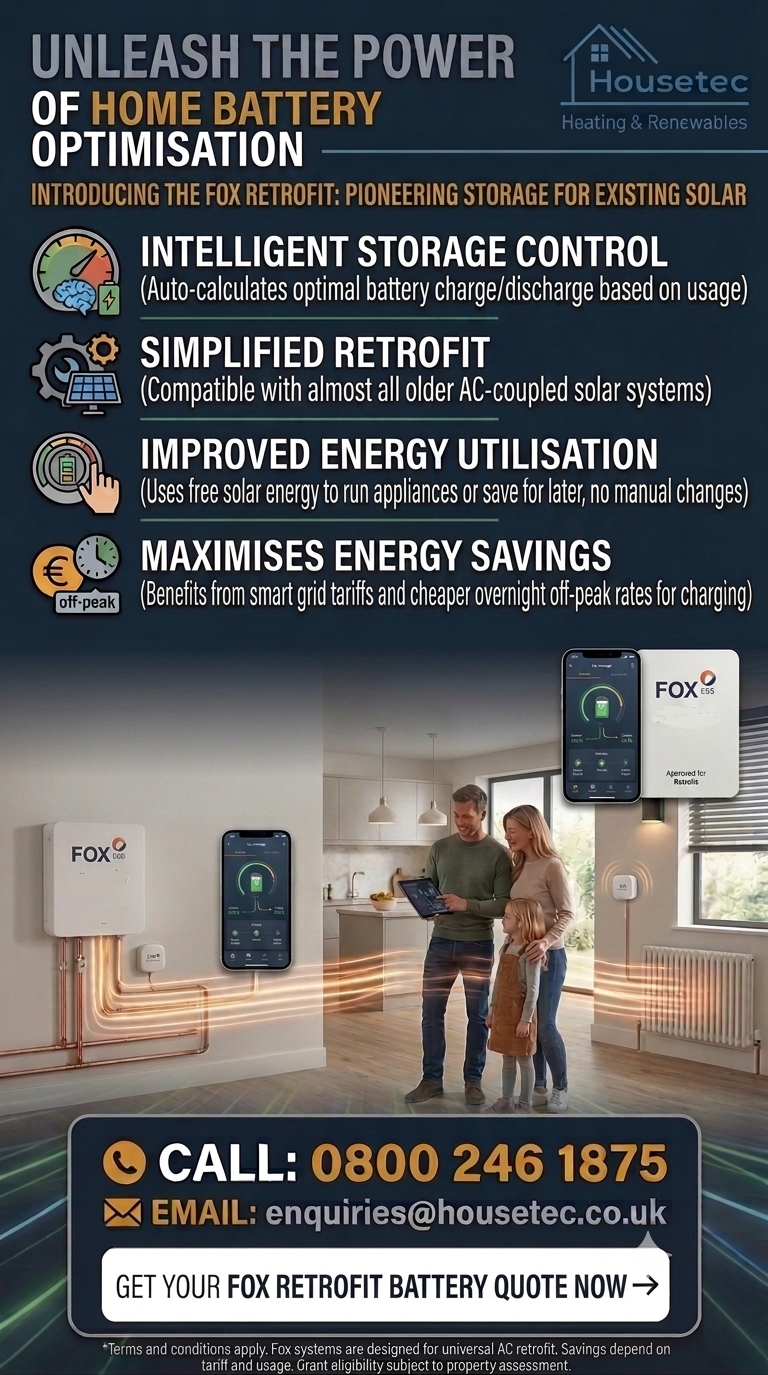
Retrofitting a home battery storage system directly solves this issue, allowing homeowners to capture their own generated power without risking or forfeiting their long-term legacy FiT contracts.
A primary hesitation among early adopters is the fear of breaching regulator guidelines or forfeiting their 20 or 25-year FiT contract. Generation Tariff Security: FiT generation payouts are calculated solely on total electricity produced by the solar array, independent of how much energy is consumed, stored, or exported. Most older legacy systems operate on a "deemed" export rate, assuming 50% of generated power is sent to the grid regardless of actual usage. Retrofitting a battery allows homeowners to store and consume that "exported" 50% while continuing to collect full export payments.
AC-Coupling Isolation: By utilizing an AC-coupled battery system installed downstream of the generation meter, the battery operates entirely on the home network side. The generation meter continues to log solar production normally, leaving existing compliance documentation completely untouched.
Drastically increases self-use of solar power from ~30% up to 80%+, shielding homes from peak grid pricing. Charges from the grid during cheap off-peak hours (e.g., overnight EV or dynamic tariffs) to power the home during peak daytime rates. Standalone battery retrofits qualify for 0% VAT relief in the UK through March 2027, reducing total capital equipment and installation costs. IAC-coupled architecture retains the existing operational solar inverter, eliminating the need for expensive high-voltage rewiring or total system overhauls.
We need your consent to load the translations
We use a third-party service to translate the website content that may collect data about your activity. Please review the details in the privacy policy and accept the service to view the translations.